

GAW Symposium 2021

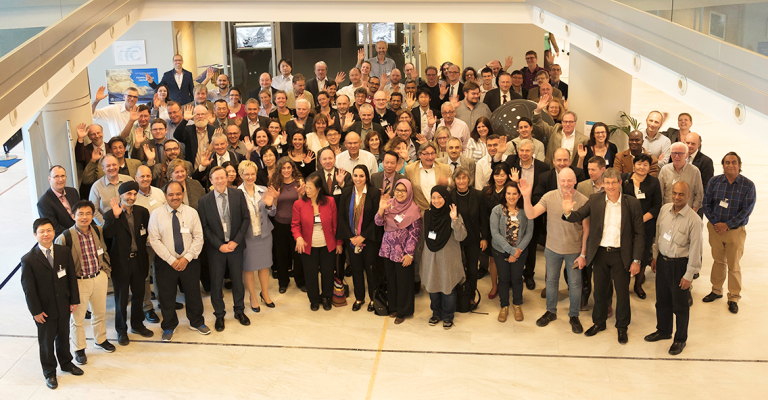
This year's quadrennial GAW Symposium took place online from
28 June to 2 July 11:00 am – 3:00 pm CEST
It consisted of the following scientific sessions:
- Science for services: The importance of atmospheric composition
- Filling critical gaps in observations
- Atmospheric composition, pandemics and support for a new health agenda
- Earth system modelling and data management
On the last day, three panel discussions took place:
- Young scientists and capacity building in GAW
- Embracing diversity in GAW
- Reflections on Symposium and way forward for GAW
Three side events fostered discussion:
- Quality assurance in the GAW network: common methods and approaches
- Data management
- Earth system modelling
Thank you very much for your contributions to this year's GAW Symposium! It was a pleasure to see you.
Session descriptions and material
Session 1: Science for services: The importance of atmospheric composition
2021_GAW_Symposium_session_1.mp4 from WMO - OMM on Vimeo.
Oral presentations
Poster presentations
| 1 | Suvarna Tikle, Tanmay Ilame and Gufran Beig | Economic benefits of Seamless Air Quality Prediction and Advisory Services in Health Sector |
| 2 | Martina Mazzini, Angelo Lupi, Paolo Bonasoni, Angela Marinoni | Analysis of the aerosol number size distribution variability and characterization of new particle formation events at Monte Cimone GAW global station |
| 3 | Cihan DUNDAR, Ayse Gokcen ISIK, Nezahat OZ, M. Ali PEKIN, Isameddin OMAK | Evaluation of Atmospheric Aerosols over West Asia for the last two decades |
| 4 | Barış ÖZGÜN, Cihan DÜNDAR, Emel ÜNAL | The Analysis of Ankara-Polatli Haboob dated at September 12, 2020 |
| 5 | Amanda Cole, Wenche Aas, Camilla Andersson, Leonard Barrie, Frank Dentener, Joshua Fu, Corinne Galy-Lacaux, Jeffrey Geddes, Maria Kanakidou, Donna Schwede, Fabien Paulot, Robert Vet, Lorenzo Labrador | The Measurement-Model Fusion for Global Total Atmospheric Deposition (MMF –GTAD) Initiative |
| 6 | Alok Sagar Gautam, Sanjeev Kumar, Deewan Singh Bisht | Chemical Characteristics of Atmospheric Aerosols & Rainwater chemistry observation at the high-altitude sites Garhwal areas in the Central Himalayas: variations, influence factors, sources, and potential environmental effects |
| 7 | Osvaldo Cuesta Santos | Atmospheric Nitrogen Inputs in Humid Tropical Climate: Cuba. need to rescue La Palma monitoring regional station (GAW) |
| 8 | Jocelyn Turnbull, Felix Vogel, Phil DeCola, and the IG3IS urban writing team | Towards an International standard for Urban Greenhouse Gas Monitoring and Assessment |
| 9 | Sangwon Joo, Haeyoung Lee, Jinkyu Hong, Jeongsik Lim, Hochan Lee, and Eunsook Kim | Introduction of the WMO endorsed IG3IS project INVERSE-KOREA (INverse modelling for Validating and Evaluating of the Reduction of Sectoral greenhouse gas Emissions in Korea) |
| 10 | Vishnu Thilakan, Dhanyalekshmi Pillai, Christoph Gerbig, Aparnna Ravi, Michal Galkowski, and Thara Anna Mathew | Towards implementing a regional high-resolution inverse modelling system for estimating the CO2 fluxes over India: quantification of fine-scale CO2 spatiotemporal variability |
| 11 | Zhang, Xiaoye; Chen, Baozhang; Zhong, Junting | Evaluations of carbon neutrality effectiveness and progress in greenhouse gases observations in China. |
| 12 | Bighnaraj Sarangi, Lemanuel Colon Resto, Darrel Baumgardner, Elvis Torres Delgado, Pedro A Leon Bergodere, Jessica Colon Gonzalez, Isis A Guadallupe-diaz, John A. Ogren, and Olga L. Mayol-Bracero | Development of an Aerosol and Cloud Analysis System in the Caribbean |
| 13 | Ravi Yadav and Gufran Beig | Biogenic and anthropogenic isoprene (C5H8) emissions in the urban atmosphere |
| 14 | Donghee Lee, Ja-Ho Koo, Jin-Soo Kim, Patrick E. Sheese, Kaley A. Walker | Vertical distributions of hydrocarbons in UTLS regions associated with Australian Bushfire |
| 15 | Jgor Arduini, Francesco Graziosi, Umberto Giostra, Paolo Cristofanelli, Michela Maione | Continuous observations of emerging pollutants at the WMO GAW global station of Monte Cimone (Italy). |
| 16 | Gerardo Carbajal Benítez, Eduardo Luccini, Elian Wolfram, Facundo Orte, María Elena Barlasina, Fernando Nollas, and Héctor Ochoa. | Antarctic Ozone hole season bulletin from Argentina. |
| 17 | Mykhailo Savenets, Volodymyr Osadchyi, Andrii Oreshchenko | The experience of Sentinel-5P satellite data usage for air pollution monitoring and warning in Ukraine |
| 18 | Alberth Nahas, Herizal, Ardhasena Sopaheluwakan, Sugeng Nugroho, Budi Setiawan, Asep Firman Ilahi, Budi Satria | 25 years of the Global Atmosphere Watch Programme in Indonesia |
| 19 | F. Vogel, A. Ars, D. Wunch, H. Maazallahi, T. Roeckmann, J. Necki, J. Bartyzel, P. Jagoda, D. Lowry, J. France, J. Fernandez, H. Chen, C. Yver-Kwok, S. Defratyka, JA, Morgui, F. Dietrich, X. Zhao, J. Chen, H. Denier van der Gon, S.N.C. Dellaert, J. Salo, C. Konek and M. Demeter | Using ground-based mobile measurements to monitor urban methane leaks across in twelve cities eight countries |
| 20 | Vineet Yadav, Riley Duren, Dan Cusworth, Andrew Thorpe, Kristal R. Verhulst, Jooil Kim, Thomas Nehrkorn, Marikate Mountain, Ralph F. Keeling, Ray F. Weiss and Charles E. Miller | Methane Emissions in the Los Angeles Basin are declining |
| 21 | Daniel H Cusworth, Riley M Duren, Andrew K Thorpe, Eugene Tseng, David Thompson, Abhinav Guha, Sally Newman, Kelsey T Foster, and Charles E Miller | Using remote sensing to detect, validate, and quantify methane emissions from solid waste operations |
Session description
A key priority of the World Meteorological Organization is the provision of “science for services,” in other words, the timely, ongoing delivery of high-quality scientific information on which to base policy decisions, support businesses and to inform the public. Measurements, analysis products, and forecasts of atmospheric composition are critical to a wide range of clients in addition to standard weather, climate and hydrological information. In recognition of this, the Global Atmosphere Watch Programme has launched three service-focused initiatives to address the needs of these stakeholder communities as they work toward the UN Sustainable Development Goals. The Integrated Global Greenhouse Gas Information System (IG3IS) supports the improvement and use of greenhouse gas emission information so that governments, industry and civil society can better target opportunities for emission reductions and track progress toward meeting emission reduction goals. The Global Air Quality Forecasting and Information System (GAFIS) aims to ensure air quality forecasting and information is available on global to urban scales, to support the mitigation of the negative impacts of air quality on human health and food production and to guide efforts to improve air quality. And the Measurement-Model Fusion for Global Total Atmospheric Deposition (MMF-GTAD) initiative has the goal of providing global estimates of the input of air pollutants to aquatic and terrestrial surfaces – critical information for protecting biodiversity and water quality in the long term. In this session, we invite researchers, service providers, and the user community to present examples of successful or potential ways in which atmospheric composition-based information is providing critical services to society on regional, national and subnational scales (including urban). The success stories that support the three mentioned initiatives, other services supporting extreme air pollution events and services to health community are welcome to the session.
Session 2: Filling critical gaps in observations
2021_GAW_Symposium_session2.mp4 from WMO - OMM on Vimeo.
Oral Presentations
| 11:30-11.40 | Dagmar Kubistin; Mueller-Williams, J.; Klein et al | Semi-Direct OH Reactivity (kOH) Measurements by Chemical Ionization Mass Spectrometry at the GAW Station Hohenpeissenberg |
| 11:40-11:50 | Julie Nicely, Angela Benedetti, Sonja Böll et al | Lessons from Past and Ongoing Capacity Building Efforts: Scope and Objectives of the Newly Established GAW Capacity Development Task Team |
| 11:50-12:00 | Richard E Peltier, et al | An Update on Low-cost Sensors for the Measurement of Atmospheric Composition |
| 12:00-12:10 | Joannes D. Maasakkers, Berend Schuit, Gourav Mahapatra et al | Detecting methane super-emitters by combining multiple satellite instruments |
| 12:10-12:20 | Chris Rennick, Emmal Safi, Caroline Dylag et al | A new instrument for in situ automated measurement of Methane’s δ13C and δD and application to regional source attribution |
| 12:20-12:30 | Haeyoung Lee, Sangwon Joo, Young-Suk Oh et al | Integrated GHG observations in Korea |
| 12:30-13:00 | Speed poster presentations (1’ per poster) | See the poster list for Session 2 |
Poster presentations
| 1 | Benjamin J. Murray, Ken S. Carslaw; Paul R. Field, Trude Storelvmo, Naruki Hiranuma, Larissa Lacher, Michael P. Adams, Achim Hobl, Franziska Vogel and Ottmar Möhler | The need for long-term measurements of atmospheric ice-nucleating particles to address uncertainty in climate sensitivity |
| 2 | Christoph Zellweger, Martin Steinbacher, Lukas Emmenegger, Brigitte Buchmann | WCC-Empa activities improve data availability and data quality |
| 3 | Dafina Kikaj, Chris Rennick, Edward Chung, Alan D. Griffiths, Scott D. Chambers, Tim Arnold | Validation of GHG Emission Inventories by 222Rn Measurements: Importance of Deconvolution Method in 222Rn Measurements Correction |
| 4 | Darrel Baumgardner | A Fog and Aerosol Spectrometer for Analyzing Single Particle Shape and Composition |
| 5 | Georgi Tancev, Céline Pascale | Optimizing Characterization and Recalibration Procedures for Low-Cost Sensors in Air Quality Monitoring |
| 6 | Marcos Andrade, Laura Ticona, Michel Ramonet, Olivier Laurent, Paolo Laj, Fernando Velarde, Isabel Moreno, Rene Gutierrez, Ricardo Forno and Luis Blacutt | Six years of measurements of atmospheric methane at the Chacaltaya GAW regional station |
| 7 | Martin Steinbacher, Christoph Zellweger, Lukas Emmenegger, Brigitte Buchmann | International collaboration in supporting observations in data sparse regions – lessons learnt from the Quality Assurance / Science Activity Centre Switzerland |
| 8 | Michel Grutter, Wolfgang Stremme, Noemie Taquet, Claudia Rivera-Cárdenas, Rubén Pavia, Alain Zuber, Benedetto Schiavo, Sandra Porras, Eugenia González del Castillo, Mixtli Campos-Pineda | The Altzomoni Atmospheric Observatory: a state-of-the-art high-altitude station in central Mexico |
| 9 | Omaira E. García, Eliezer Sepúlveda, Sergio F. León-Luis, Josep-Antón Morgui, Matthias Frey, Carsten Schneider, Ramón Ramos, Carlos Torres, Roger Curcoll, Carme Estruch, África Barreto, Carlos Toledano, Frank Hase, André Butz, Emilio Cuevas, Thomas Blumenstock, Juan J. Bustos, and Carlos Marrero. | Monitoring of Greenhouse Gas and Aerosol Emissions in Madrid megacity (MEGEI-MAD) |
| 10 | Pamela Trisolino, Alcide di Sarra, Damiano Sferlazzo, Salvatore Piacentino, Francesco Monteleone, Tatiana Di Iorio, Francesco Apadula, Daniela Heltai, Andrea Lanza, Antonio Vocino, Luigi Caracciolo di Torchiarolo, Daniele Biron, Stefano Amendola, Paolo Bonasoni, Francescopiero Calzolari, Maurizio Busetto and Paolo Cristofanelli | An improved atmospheric CO2 background data selection method (BaDS): application to near-surface atmospheric CO2 measurements in Italy by a collaborative network of four permanent observatories |
| 11 | Paul J. Brewer, Andrew S. Brown, Sangil Lee, Joele Viallon, Robert I. Wielgosz, Joseph J. Hodges, Jennifer Carney, James Norris, Louise Sorensen, Joann Rice, Christoph Zellweger, Hiroshi Tanimoto and Bernhard Niederhauser | Implementation of a New Value of the Ozone Absorption Cross-section per Molecule at 253.65 nm (air) for Global Atmospheric Ozone Measurement |
| 12 | R. Stübi, J. Gröbner, H. Schill, F. Zeilinger, J. Klausen, E. Maillard Barras, A Haefele, L. Egli | Continuity of the Arosa ozone column series after Dobson automation and the displacement of the LKO instruments to Davos |
| 13 | Ruhi S. Humphries, Jason P. Ward, Melita D. Keywood, Zoe Loh, Paul B. Krummel, Suzie Molloy, Alastair G. Williams, Scott D. Chambers, James Harnwell, Ian M. McRobert, Will Ponsonby, Hanuman Crawford, and Andreas Marouchos | RV Investigator atmospheric capability – the world’s first mobile GAW station |
| 14 | Songkang Kim | Comparison of Ground Observation Total Ozone Column Data in Antarctica Using Satellite Sensors |
| 15 | Sonja Böll | 20 years of GAWTEC and a view to the future |
| 16 | S.Kinne, S.Doerner, A.Butz, F.Jansen | References for atmospheric satellite retrievals over oceans. |
| 17 | S. Rohs , A. Petzold , H. G. J. Smit , H. Clark , Y. Bennouna , D. Boulanger | Automated data processing and quality control of IAGOS water vapour data in Near Real Time (NRT) for the validation of the chemical transport models of Copernicus Atmosphere Monitoring Service (CAMS) |
| 18 | Tobias Bühlmann, Maitane Iturrate-Garcia, Martin K. Vollmer, Stefan Reimann, Céline Pascale | Traceable reference gas mixtures for halogenated VOCs developed within the framework of the EMPIR project MetClimVOC |
| 19 | Viktor M. Ivakhov, Paramonova N. N., Polischuk A. I., Solomatnikova A.A., Semenets E.S. | WMO GAW observational network in Russia |
| 20 | Zoë M. Loh, Jason P. Ward, Melita D. Keywood, Paul B. Krummel, Elise-Andree Guerette, Alastair G. Williams, Scott D. Chambers, Sylvester Werczynski, Tony Morrison, James Harnwell, Jenny Powell, Erin Dunne, Jon Schatz, Gabrial Millar | Gunn Point - a tropical GAW station in Australia |
| 21 | Renée Bichler und Michael Bittner | Relationship between economic growth and satellite-based measurements of NO2 pollution over northern Italy |
Session description
High quality observations of atmospheric composition are essential to understand how composition changes over time in response to human and natural processes. They are used to support international conventions, to estimate human and ecosystem impacts due to air pollution, and to understand climate radiative forcings. Atmospheric composition measurements are also playing increasing roles in numerical weather prediction and a host of weather and environmental services. There remain important gaps in the atmospheric composition observing systems, with gaps in geographical coverage of many important parameters. WMO maintains a Rolling Review of Requirements that provides an ongoing assessment of user requirements that are compared to current observational capabilities. There are three atmospheric composition application areas (Monitoring, Forecasting, and Urban services; see https://www.wmo-sat.info/oscar/applicationareas for details) that span the diverse requirements of researchers and end-users. In this session, we welcome abstracts that address current and looming critical gaps in the observing system as they pertain to these atmospheric composition application areas. Presentations describing technologies that can mitigate these gaps are solicited; in particular those that address the roles of satellites and low-cost sensors. Presentations highlighting advanced or new emerging observational methods and techniques are also of interest. The session will emphasize also the role of quality assurance/quality control (QA/QC) of observational near real time data in the validation of air quality forecasting/re-analysis models and their QA/QC-feedback to the observation networks.
Session 3: Atmospheric composition, pandemics and support for a new health agenda
2021_GAW_Symposium_session_3.mp4 from WMO - OMM on Vimeo.
Oral presentations
Poster presentations
| 1 | Alexandros Papayannis, Panagiotis Kokkalis, Maria Mylonaki, Ourania Soupiona, Christina-Anna Papanikolaou, Romanos Foskinis, Stavros Solomos, Stergios Vratolis, Vasiliki Vasilatou, Eleni Kralli, Dimitra Anagnou, Marilena Gidarakou | Aerosol mixing processes and radiative forcing effects of a 10-days (11-20 May 2020) dust event over Athens, Greece, during the COVID-19 confinement period |
| 2 | Giath Doun, Yesra Shkaky, Roba alMaghout, Mohammad Bashar Orabi | Using of Remote Sensing Images for Monitoring Air Quality in Syria during COVID-19 Quarantine 2020 |
| 3 | Cong Liu, Renjie Chen, Antonio Gasparrini, Haidong Kan, MCC Collaborative Network | Ambient air pollution and daily mortality in the Multi-Country Multi-City (MCC) project |
| 4 | Hannah Clark, IAGOS team | Effects of the COVID-19 pandemic on the availability of IAGOS data |
| 5 | Henk Eskes, Pepijn Veefkind, Jos van Geffen, Bas Mijling, Ronald van der A, Jieying Ding, Pieternel Levelt, Kazuyuki Miyazaki, Christophe Lerot | Reductions of NO2 Air Pollution during Covid-19, as Observed by Sentinel-5P TROPOMI |
| 6 | Jiacan Yuan, Dawei Li, Robert Kopp | Escalating global exposure to compound heat-humidity extremes with warming |
| 7 | Joshua Fu and Cheng-Pin Kuo | A Hybrid Machine Learning Framework to Identify Driving Forces of COVID-19 Transmission |
| 8 | Minsu Kim, Gerrit Kuhlmann, Lukas Emmenegger, and Dominik Brunner | Hourly maps of near-surface NO2 at 100 m resolution enable dynamic exposure assessment |
| 9 | Nikhil Korhale, Vrinda Anand, Gufran Beig | Disparity in ozone trends under COVID-19 lockdown in a closely located coastal and hillocky metropolis of India |
| 10 | Ranjeet S. Sokhi, Vikas Singh, Xavier Querol, Sandro Finardi, Admir Créso Targino, Maria de Fatima Andrade, Radenko Pavlovic, Rebecca M. Garland, Jordi Massagué, Shaofei Kong, Alexander Baklanov, Lu Ren, Oksana Tarasova and Greg Carmichael | Changes in air quality during the COVID-19 pandemic - Implications for research, policy and health |
| 11 | Ritesh Kalbande, Shahana Bano, Gufran Beig | Stubble burning menace of toxic Benzene and Toluene and their implication to Ozone chemistry and human health in the Indo-Gangetic Plain region |
| 12 | Sandro Finardi, Giuseppe Calori, Alessio D’Allura, Andrea Bolignano, Alessandro Di Giosa | Analysis of COVID-19 lockdown measures impact on the air quality in Rome region: key indications for future air quality management |
| 13 | Tetiana Shablii | Climate Change as a Risk Factor for Adverse Perinatal Outcomes |
| 14 | Yue Zhu, Li Peng, Hao Li, Jinhua Pan, Haidong Kan, Weibing Wang | Temporal variations of short-term associations between PM10 and NO2 concentrations and emergency department visits in Shanghai, China 2008-2019 |
| 15 | Rabab Mashayekhi, Radenko Pavlovic, Jacinthe Racine, Michael D. Moran, Patrick M. Manseau, Annie Duhamel, Ali Katal, Jessica Miville, David Niemi, Si Jun Peng, Mourad Sassi, Debora Griffin and Chris McLinden | Canadian experience with air quality changes induced by COVID-19 lockdown measures: lessons learned and implications for national air quality objectives |
Session description
This session will focus on the interactions between atmospheric composition and pandemics and the broader impacts on human health. Over the past year the spread of SARS-COV-2 virus (cause of the COVID-19 disease) has stimulate research communities globally to understand these interactions and to highlight lessons for the atmospheric science, weather, climate communities as well as for the health and policy sectors to develop more robust response strategies. Broader messages are emerging to improve and enhance existing infrastructures and forecasting and response capabilities which will be particularly relevant for WMO/GAW.
This session is being held in partnership with WHO, WWRP and WCRP to (i) review the status of knowledge on the interactions between the atmosphere and pandemics, (ii) highlight key gaps and lessons that are relevant for policy on air quality and health and (iii) to make recommendations on the closer cooperation between the atmospheric composition, weather, climate and health communities. With a particular emphasis on forward look, the key themes of this sessions will be:
(i) New knowledge on the interactions between atmospheric composition, weather and climate and the spread of viruses and biological materials;
(ii) New initiatives to enhance atmospheric composition modelling and observations to further our understanding of the impacts of pandemics and the spread of biological materials; and
(iii) Role of atmospheric composition research to better prepare for future pandemics, support the health community and identify areas of infrastructure development.
We welcome abstracts for oral and poster presentations on research that is sufficiently mature to contribute to one or more of the above themes.
Session 4: Earth system modelling and data management
2021_GAW_Symposium_session_4.mp4 from WMO - OMM on Vimeo.
Oral presentations
| 11:30-11.40 | Andreas Petzold (invited) | Challenges and solutions for data management and interoperability in the atmospheric domain – The ENVRI-FAIR approach |
| 11:40-11:50 | Sebastián Villalón, Camilo Menares, Laura Gallardo, Francisca Muñoz, Charlie Opazo, Juan Crespo, Carmen Vega | Development of an online tool for ozone data sharing from El Tololo and Rapa Nui, Chile |
| 11:50-12:00 | Etienne Tourigny (invited) | Towards near-time prediction of the global carbon cycle with EC-Earth-CC, the carbon cycle version of the EC-Earth model. |
| 12:00-12:10 | Ravan Ahmadov, Eric James, Jordan Schnell et al | Adding smoke and air quality forecasting capabilities to NOAA's numerical weather prediction models |
| 12:10-12:20 | Jörg Klausen, Tom Kralidis, Gao Chen et al | Enabling exchange and adequate use of data for observation based atmospheric research |
| 12:20-12:30 | Taegyung Lee, Ja-Ho Koo, Sungbo Shim | Prediction of future air quality in South Korea using the UKESM1 modeling |
| 12:30-12:50 | Speed poster presentations (1’ per poster) | See the poster list for Session 4 |
Poster presentations
Session description
The atmosphere is the component of the Earth System that is most directly affected by human activities through changing its composition. This cuts across all spatial and temporal scales and underpins observed changes in inter alia deposition fluxes, air pollution and climate forcing. Session 4 calls for contributions about recent progress in investigating the role of atmospheric composition variability and changes on short, medium and extended range weather forecasting, climate modelling, impact modelling as well as about new insights regarding composition/dynamics/radiation/microphysics feedbacks at process level. In short, the session will showcase and discuss progress regarding the question “why atmospheric composition representation matters?” for modelling & data assimilation of the Earth System as a whole, bringing additional value on top of “composition for composition sake” applications that will be the focus of Session 1. An area of specific interest is the fast emerging use of Artificial Intelligence techniques (observations filtering/selection, data assimilation, model emulation, data mining, downscaling…) and contributions on this aspect are especially welcome. Finally, we invite presentations discussing requirements and gaps related to interoperability of data and metadata, examples of end-to-end solutions building on WIS and WIGOS, progress in automated near-real-time quality assessment and quality control of observations in support of global, regional or local atmospheric composition data services in academic or operational settings.
Panel 1: Young scientists and capacity development in GAW
2021_GAW_Symposium_panel_1.mp4 from WMO - OMM on Vimeo.
Panel 2: Embracing diversity in GAW
GAW_Symposium_2021_panel2.mp4 from WMO - OMM on Vimeo.