

WIS2 Operational Newsletter (No.2)
WIS2 Operational Newsletter (Issue: 2025-02)
Issued on: 19 December 2025
This newsletter includes the following updates:
✅Global Services + Operational WIS2 nodes
✅WIS2 Champions Network
✅WIS2 Trainings Summary
✅WDQMS Release v1.7 Available in the Test System (Transition Monitoring)
✅WIS2 Test Infrastructure Go Live
✅WIS2 Cookbook First Release
If you have received this newsletter directly from WMO, you are already subscribed and will continue to receive future operational updates automatically. However, if you read this newsletter via a forwarded email or on the web, we encourage you to click here to subscribe to the WIS2 Operational Newsletter. Direct subscription ensures you receive real-time notifications of critical operational changes and system updates, helping you stay at the forefront of WIS2 developments and maintain optimal operational readiness.
Global Services + Operational WIS2 Nodes
WIS 2.0 Global Services provide a set of centralized capabilities that support efficient, reliable, and resilient global data exchange. They enable data discovery, access, monitoring, and notification distribution, ensuring high availability and seamless collaboration among data providers and users worldwide.
WIS2 Global Services include:
- Global Broker: Distributes notification messages across the system for real-time data discovery.
- Global Cache: Stores and provides access to frequently requested data, improving efficiency and reducing latency in data retrieval.
- Global Discovery Catalogue: Enables users to search for and browse metadata descriptions of published data.
- Global Monitor: Tracks data publication, accessibility, and system performance to ensure reliability.
During the transition period, the following temporary services are also available:
- GTS-to-WIS2 Gateway: Publishes all data on the GTS onto WIS2
- WIS2-to-GTS Gateway: Publishes a subset of data on WIS2 onto GTS
For an overview of the WIS 2.0 Global Services and their endpoints, please visit this page: WIS 2.0 Global Services
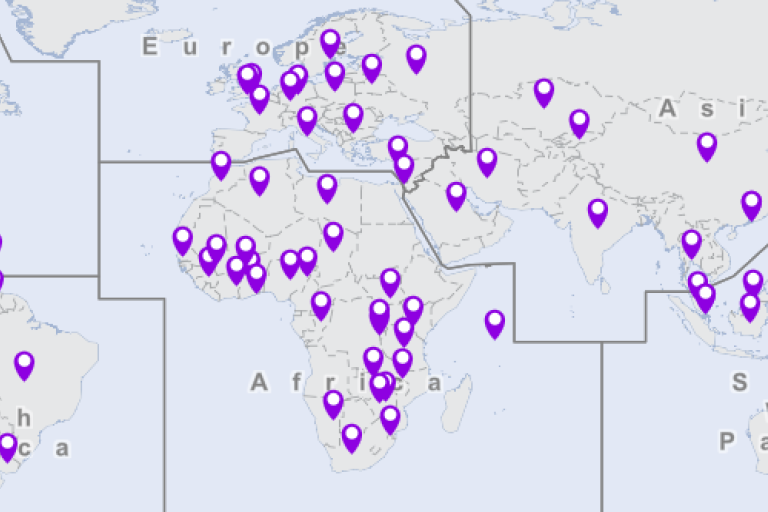
You can find the up-to-date list of operational WIS2 Nodes in the WIS2 Global Registry which is maintained by the Secretariat. As of 15 December, around 90 WIS2 nodes are registered as Operational WIS2 nodes.
The table below shows the list of new Operational WIS2 Nodes registered in last 12 months illustrating the significant progress made, especially in region I.
| WMO Member or contributing organization | Region | WIS Centre Type | centre-id |
| Benin | I | NC | bj-meteobenin |
| Burundi | I | NC | bi-igebu |
| Ghana | I | NC | gh-gmet |
| Guinea | I | NC | gn-anm |
| Malawi | I | NC | mw-dccms |
| Mali | I | NC | ml-malimeteo |
| Mozambique | I | NC | mz-inam |
| Rwanda | I | NC | rw-rma |
| Senegal | I | NC | sn-anacim |
| Seychelles | I | NC | sc-seychelles-met |
| South Sudan | I | NC (TBC) | ss-ssms |
| Togo | I | NC | tg-anamet |
| United Republic of Tanzania | I | NC | tz-tma |
| Kyrgyzstan | II | NC | kg-kyrgyzhydromet |
| Thailand | II | NC | th-tmd |
| Colombia | III | NC | co-ideam |
| Peru | III | NC | pe-senamhi |
| Venezuela (Bolivarian Republic of) | III | NC | ve-inameh |
| Canada | IV | DCPC (Pre-approval) | org-woudc |
| Costa Rica | IV | NC | cr-imn |
| Honduras | IV | NC | hn-cenaos |
| Brunei Darussalam | V | NC | bn-bdmd |
| Bulgaria | VI | NC | bg-nimh |
WIS2 Champions Network: 11 Selected
To support the successful implementation of, and a smooth transition to WIS 2.0, a network of WIS 2.0 Champions has been established.
The WIS 2.0 Champions will be integrated into the WMO Expert Network. Their role will focus on the following activities:
- Advocating for the adoption and implementation of WIS 2.0 within National Meteorological and Hydrological Services (NMHSs) and across all WIS Centres;
- Providing technical guidance on WIS 2.0 standards, protocols, and tools;
- Supporting Members in meeting WIS 2.0 operational requirements and managing the transition;
- Fostering regional and global collaboration to strengthen and accelerate WIS 2.0 implementation.
Following a competitive selection process and interviews, eleven experts have been appointed, as follows:
| Country | Name |
| Morocco | Chemseddine Elgarrai |
| China | Mingjiao Gong |
| Belize | Dwayne Scott |
| New Zealand | Bill Self |
| Türkiye | Yasin ER |
| Mexico | Salomón Rodríguez Wences |
| Trinidad Tobago | Kimberly Seaton |
| South Africa | Rinae Tshibubudze |
| Indonesia | Boma Anjang Pertala |
| Kazakhstan | Aigerim SMAGULOVA |
| Vanuatu | Esther Saul |
A training session is planned for March next year to equip WIS 2.0 Champions with the knowledge, skills, and tools needed to promote WIS 2.0 adoption, provide technical guidance, support Members in the transition to WIS 2.0 operations, and strengthen regional and global collaboration for effective WIS 2.0 implementation
WIS2 Training Summary
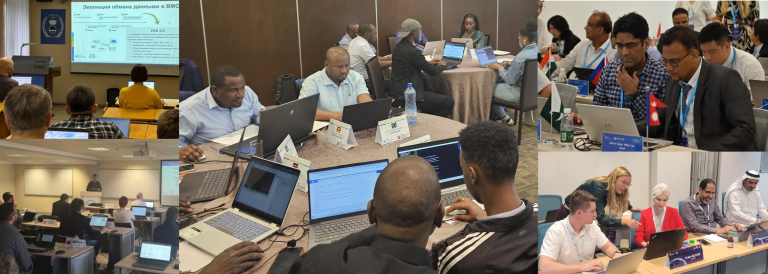
In 2025, five in-person trainings and one online training were conducted, covering 68 members.
The agenda and training materials for all WIS2 trainings workshops organized by the WMO Secretariat in 2025 are available on WMO's ETRP Platform, accessible via the links in the table:
| Training session (ETRP link) | Training Dates | Number of WMO Members | Number of Participants |
|---|---|---|---|
| 2025-04-Oman | 13-17 April 2025 | 15 | 27 |
| 2025-09-China | 15-19 September 2025 | 16 | 26 |
| 2025-09-Iran-Online | 29-30 September 2025 | 1 | 8 |
| 2025-10-Kenya | 13-17 October 2025 | 14 | 28 |
| 2025-10-Russian Federation | 21-24 October 2025 | 8 | 15 |
| 2025-11-Türkiye | 17-21 November 2025 | 14 | 24 |
In the addition to the WIS2 Training workshop organized by WMO, the Japanese Meteorological Organization organized a training workshop for Members in their Area of Responsibility from 18 to 20 November.
For more information on the WIS2 Capacity Development program please visit this Link.
WDQMS Release v1.7 Now Available in the Test System(Transition monitoring)
WDQMS release v1.7 introduces Transition Monitoring, a new module designed to support the community to monitor the transition from GTS to WIS2 and from TAC to BUFR. The release also includes a redesigned landing page for improved navigation.
The release is available in the test system.
The Transition Module provides two dedicated views:
- GTS to WIS2, showing whether stations are reporting via (1) GTS, (2) WIS2, or (3) both GTS & WIS2, to help track progress from GTS towards WIS2.
- TAC to BUFR, indicating whether stations are reporting in (1) TAC, (2) BUFR, or both TAC & BUFR, supporting the BUFR transition.
Both views visualize message counts by source or encoding and include interactive pop-ups with detailed statistics. Additionally, detailed information can be downloaded via the API.
Transition Monitoring is built on pre-data assimilation data provided by ECMWF and operates independently of data assimilation and NWP models.
The redesigned landing page now defaults to the NWP module, with tabs providing access to the GBON, GCOS, and Transition Monitoring modules.
This module, along with updated user manual documentation, will become operational on 12 January 2026. Feedback and comments are welcome and can be sent directly to wis wmo [dot] int (wis[at]wmo[dot]int) or tproescholdtwmo [dot] int (tproescholdt[at]wmo[dot]int)
Quick links:
Transition Infrastructure
During the transition period, in order to avoid the WIS Centres being forced to run both data-sharing frameworks WIS2 and GTS simultaneously, with the challenges associated with maintaining two operational systems for the same purpose, gateways from GTS to WIS2 and from WIS2 to GTS are designed, taking into account the time required for Members to migrate to the new systems and minimizing the time a member has to operate both systems in parallel.
The GTS to WIS2 Gateway provided by Germany and Japan, as well as the WIS2 to GTS gateway, provided by China and the UK, have been operational since March 2025.
WIS2 Test Infrastructure Go Live
To evaluate performance and ensure the reliability of WIS 2.0 Global Services, a dedicated WIS2 Test Infrastructure has been established. This infrastructure provides a controlled and isolated environment equipped with the tools and resources required to validate the functionality, integration, and overall performance of WIS 2.0 components, without risking disruption to the operational WIS2 system.
The WIS2 Test Infrastructure is a replica of the operational WIS2 environment and is intended exclusively for testing purposes, not for operational data exchange. It supports the evaluation of WIS2 Global Services and enables WMO Members and industry stakeholders to assess the readiness of their WIS2 nodes prior to deployment into production.
By offering a secure and controlled testing environment, the infrastructure facilitates the identification of potential issues, optimization of configurations, and verification of seamless integration with WIS 2.0. It includes the systems and tools necessary to conduct a wide range of tests, supporting in particular:
- Continuous improvement of WIS2 Global Services, through iterative development, testing, and timely resolution of issues as WIS 2.0 evolves;
- Performance evaluation of WIS2 Global Services, ensuring reliability, scalability, and efficiency;
- WIS2 node readiness, by providing the tools and environment needed to validate WIS2 nodes and confirm compliance with WIS 2.0 standards.
WIS2 Cookbook First Release
The first release of the WIS2 Cookbook is now available! It is designed to help users get started quickly and confidently with WIS 2.0, with more recipes to follow in future editions.
Click here to access the first release of WIS2 Cookbook.
In conjunction with the Manual on the WMO Information System volume II (WMO-No. 1060) (Manual on WIS volume II: WIS 2.0), the present Guide to the WMO Information System volume II (Guide to WIS volume II: WIS 2.0) is designed to ensure adequate uniformity and standardization in the data, information and communication practices, procedures and specifications employed by Members of the World Meteorological Organization (WMO) in the operation of the WMO Information System WIS 2.0 as it supports the mission of the Organization.
The Manual on WIS contains standard and recommended practices, procedures and specifications. The Guide to WIS contains additional information concerning practices, procedures, and specifications that Members are invited to follow or implement in establishing and conducting their arrangements in compliance with the WMO Technical Regulations and in developing meteorological and hydrological services.
Building on this foundation, the WIS 2.0 Cookbook provides various code snippets, recipes and workflow examples in support of WIS2 requirements.
This cookbook is a practical, implementation-oriented guide designed to support WMO Members, WIS Centres, and partners in deploying and operating WIS 2.0 components. It complements the formal WIS 2.0 technical regulations and standards by translating them into clear, step-by-step guidance, examples, and best practices.
Last update on 19 December2025