
Strengthening collaboration in Central Africa for the production and dissemination of early warnings
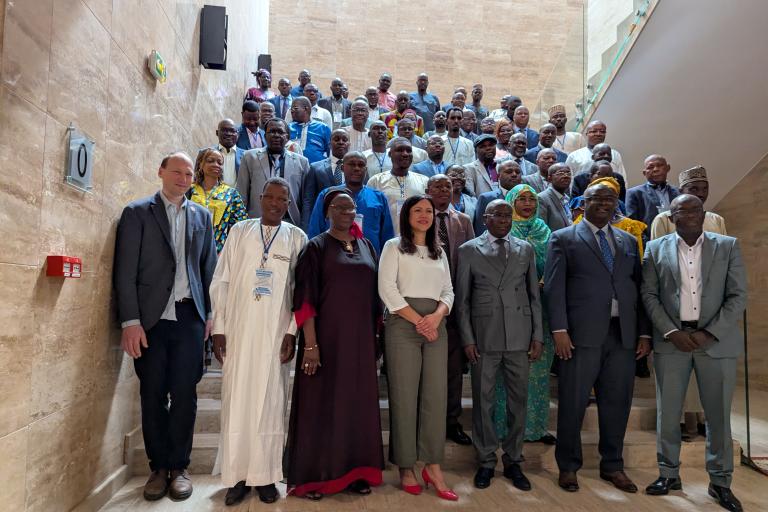
A three-day regional coordination workshop is taking place in N’Djamena, Chad (10-12 February 2026) to strengthen collaboration mechanisms between regional entities, National Meteorological and Hydrological Services (NMHSs), and Disaster Risk Management (DRM) institutions across Member States of Economic Community of Central African States (ECCAS).
It brought together 70 national, regional, and international stakeholders to improve coordination to consolidate multi-hazard early warnings (MHEW) tailored to countries in the region. This will directly contribute to advancing the Africa Multi-hazard Early Warning and Action System (AMHEWAS) and the Early Warnings for All (EW4ALL) initiative in the region.
Background
Hydrometeorological hazards such as extreme rainfall, floods, and droughts are among the most devastating disasters globally. These hazards are caused by extreme weather and water-related processes in the atmosphere and hydrological systems. Their impacts are particularly severe in developing countries, Least Developed Countries (LDCs), and Small Island Developing States (SIDS) where infrastructure, forecasting capacity, and disaster preparedness systems are often limited. Strengthening early warning systems with a multi-hazard and people centered approach is therefore critical to protect lives and livelihoods, safeguard infrastructure, reduce economic losses, and promote sustainable socio-economic development.
The workshop
The objective of the workshop was to define and formalize collaboration frameworks between regional and national entities in Central Africa specialized in climate, meteorology, hydrology, and disaster risk reduction. This coordination aligns with the four pillars of the EW4ALL initiative:
- Disaster Risk Knowledge
- Observations and Forecasting
- Warning Dissemination and Communication
- Preparedness and Response.
Effective early warning requires continuous dialogue, clear procedures across these pillars, and the use of multiple communication channels to ensure warnings are timely, actionable, and reach at-risk populations. The key themes discussed focused on strengthening information flows from regional to national and local level, tailoring information to support decision-making, improving data exchange, and Standard Operating Procedures (SOPs) to harmonize regional and national services. Discussions highlighted the need to enhance structured coordination between RSMCs, RBOs, ECCAS situation room and NMHSs and the National DRM agencies to enhance production of early warnings, ultimately saving lives.
Participants agreed on operational processes that should be developed as a roadmap to improve cooperation and collaboration and boost multi-risk early warning services in Central Africa.
This effort in Central Africa marks an important step toward operationalizing an integrated Multi-Hazard Early Warning System across ECCAS Member States, contributing directly to EW4ALL.
Participants
The workshop convened representatives from:
- National Levels: 10 NMHSs and Civil Protection agencies from ECCAS Member States (Angola, Burundi, Cameroon, Central African Republic, Chad, Congo, Democratic Republic of Congo, Equatorial Guinea, Gabon, Sao Tomé e Principe).
- Regional Entities: African Centre of Meteorological Applications for Development (ACMAD), Regional Specialized Meteorological Centre (RSMC) Dakar, Regional Forecasting Support Centre (RFSC) Yaounde, AGRHYMET Regional Centre, International Commission of the Congo-Oubangui-Sangha Basin (CICOS), Lake Chad Basin Commission (LCBC), and Lake Tanganyika Authority (LTA).
- Economic Community of Central African States (ECCAS).
The workshop was also graced by the presence of Chad’s Secretary General of the Ministry of Transport, Civil Aviation, and National Meteorology. It was organized under the banners of the CREWS Central Africa project, jointly implemented by the World Meteorological Organization (WMO), the United Nations Office for Disaster Risk Reduction (UNDRR), and the World Bank. CREWS Central Africa implementing partners expresses their sincere appreciation to the Government of Chad, ANAM, Water Resources Directory, and the Civil Protection who facilitate the coordination and hosting of this workshop.