
WMO RA VI Youth Voice Highlights Role of Partnerships in Inclusive Digital Transformation at UNECE Regional Forum for Europe and Central Asia
At the SDG 17 Peer Learning Round Table on “Partnerships for Human-Centric Inclusive Digital Transformation”, held on 21 April at the Palais des Nations in Geneva, as part of the UNECE Regional Forum on Sustainable Development 2026, the youth community contributed to discussions on strengthening inclusive digital cooperation.
The WMO Regional Office for Europe contributes regularly to the Regional Forum on Sustainable Development through its engagement in regional collaborative mechanisms, including issue-based coalitions such as the UN Digital Transformation Group for Europe and Central Asia. This year’s engagement placed particular emphasis on youth, reflecting WMO’s role as a scientific and technical UN agency undergoing end-to-end digital transformation, where inclusiveness and partnerships across generations and sectors are essential to advancing hydrometeorological services.
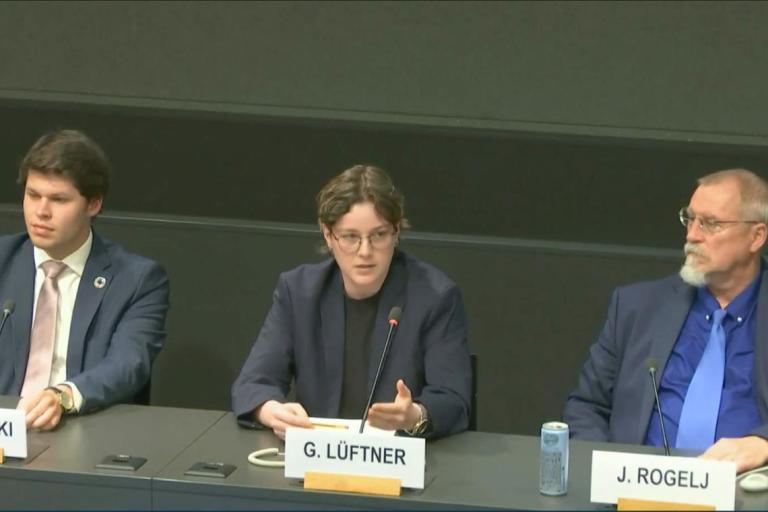
Within this framework, the WMO Regional Association VI Youth Representative, Giorgiana-Daiana Lüftner (Romania), was invited to contribute to the discussion.
The discussion took place against the backdrop of persistent global digital inequalities. Despite rapid technological progress, billions of people remain without meaningful access to connectivity, digital skills, and digital public services. These gaps—across regions, income levels, gender, and urban–rural divides—raise concerns that digital transformation could deepen existing inequalities if not guided by coordinated and inclusive approaches. The round table therefore focused on how multistakeholder partnerships can accelerate digital and AI-enabled solutions in support of the Sustainable Development Goals, while also addressing risks related to data governance, cybersecurity, privacy, environmental impacts, and unequal access to emerging technologies.
In her intervention during the segment on “Partnerships for Inclusive, Trusted Digital Transformation”, Mrs Lüftner highlighted the importance of structured youth engagement mechanisms such as the WMO Youth Action Plan, which enables early-career professionals to actively contribute to the operational and decision-making processes of National Meteorological and Hydrological Services. She emphasized that young professionals, working across meteorology, data science, and policy, help bridge institutional silos and ensure that digital systems are both technically robust and socially inclusive.
Addressing the role of partnerships in advancing the Sustainable Development Goals, she pointed to concrete examples where youth engagement is already delivering impact. The Early Warnings for All initiative supports progress towards SDG 13 Climate Action by enabling youth and national services to co-develop localized early warning tools that translate complex scientific data into actionable information. Similarly, the HydroSOS contributes to SDG 6 Clean Water and Sanitation by strengthening global drought and flood prediction systems, with early-career researchers advancing data analysis and modelling capabilities.
She also highlighted the role of the Young Earth System Scientists network in supporting innovation and strengthening the scientific foundations of global hydrological and climate services.
The intervention reinforced the importance of inclusive, multistakeholder partnerships that actively integrate youth not only as beneficiaries, but as co-creators of digital transformation. By combining institutional expertise with digital innovation and interdisciplinary collaboration, such partnerships can help ensure that no one is left behind in the transition towards more resilient and user-oriented hydrometeorological services.
The full recording of the round table is available on UN Web TV.
- Region:
- Region VI: Europe